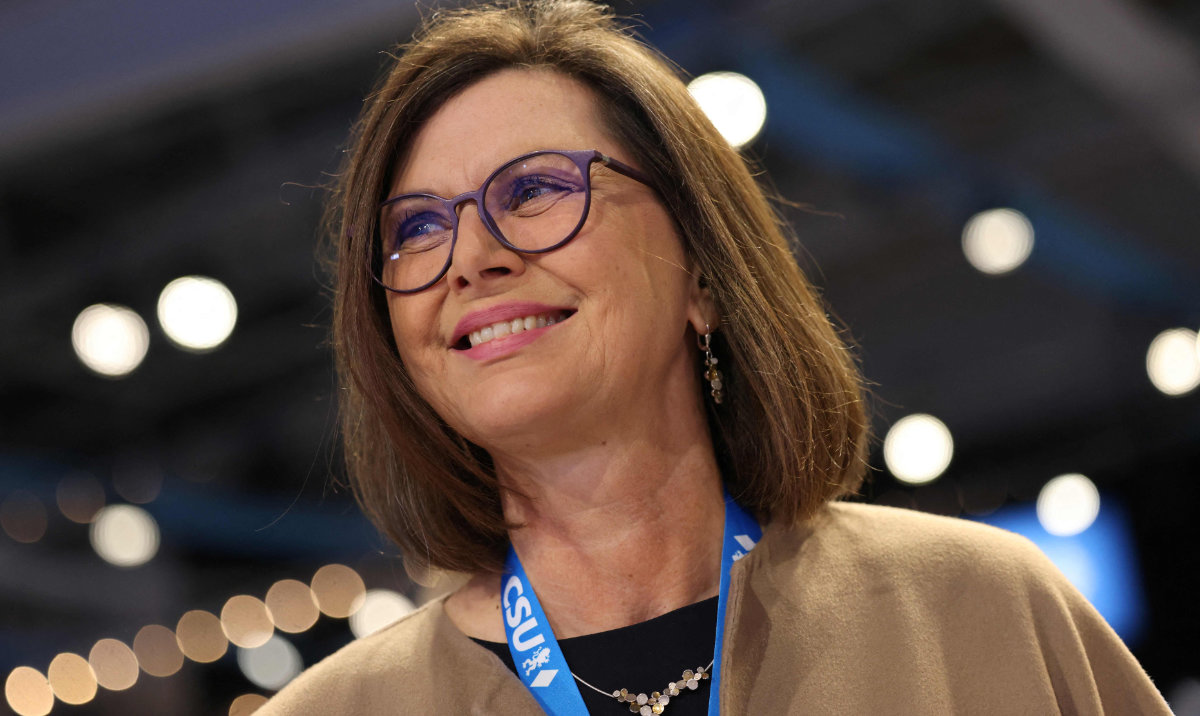
German Chancellor Friedrich Merz has announced his plan to nominate Bavarian politician Ilse Aigner as the country’s next head of state, paving the way for her to become Germany’s first female president in 2027. Merz revealed the decision on Sunday during a dinner with leaders of his center-right Christian Democratic Union, confirming earlier leaks from party insiders.
Aigner, 61, is a member of the Christian Social Union, the Bavarian sister party to the CDU. She currently serves as speaker of Bavaria’s regional parliament and previously held the post of federal agriculture minister during the chancellorship of Angela Merkel, gaining respect across party lines.
Under German political practice, coalition partners typically settle on a shared nominee for the largely ceremonial presidency, an office designed to stand above partisan politics and reflect the nation's moral conscience. The current federal coalition consists of the CDU, the CSU and the Social Democratic Party, with the SPD repeatedly voicing support for Aigner.
Dietmar Woidke, a regional SPD leader, described her as the “perfect candidate” for the role. “She knows German politics like the back of her hand,” Woidke said. “She’s accessible. She likes people, knows how to listen and people listen to her,” he added.
With voters drawn almost entirely from Germany’s two parliamentary chambers, Merz’s endorsement effectively guarantees Aigner’s election on January 30. She will succeed outgoing President Frank-Walter Steinmeier, a Social Democrat who took office in 2017 and reaches the constitutional limit of two five-year terms in March 2027.
Her supporters regard her as a unifying figure during a period of deepening political division, with the anti-migrant, pro-Russian Alternative for Germany polling at a record 28 percent. In the Bavarian legislature, Aigner has drawn praise for handling the far-right AfD in a manner seen as both courteous and firm, while her appearances in traditional dress at Bavarian beer festivals have reinforced her public standing.
Born in Bavaria to parents who operated an electricity company, Aigner survived a brush with cancer during her youth, when a tumor had to be removed from her back. She completed technical studies and worked as an electronics technician with a helicopter manufacturer before entering local and national politics.