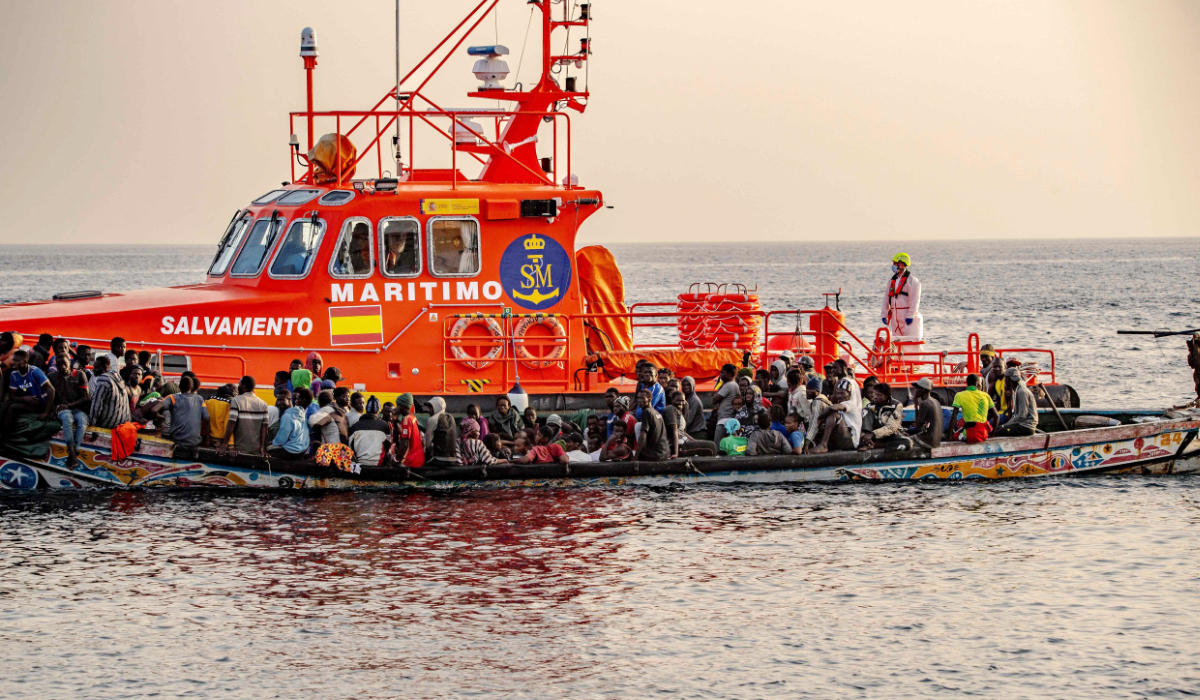
Authorities on the Spanish island of El Hierro declared an emergency on Saturday following a sharp increase in migrant boat landings, appealing for higher-level government assistance to manage the influx.
More than 3,300 people have reached El Hierro aboard around 30 vessels since the beginning of November, according to local officials. The Atlantic island is now working to secure temporary housing for the arrivals as local infrastructure comes under severe pressure.
“We are very concerned... by this sharp increase in arrivals,” Alpidio Armas, head of the island's governing council, told Spanish television. “This is precisely what has led us to declare an emergency in order to ensure a framework of cooperation with higher-level institutions.”
Armas noted that conditions at the island’s hospital have turned “undesirable.” Officials also cautioned that an approaching storm forecast overnight could heighten risks for boats currently navigating the Atlantic passage.
The journey along the route has already proven fatal in recent days. Earlier in the week, rescuers discovered two dead migrants aboard a vessel attempting to reach the Canary Islands, while survivors reported that five others died during the voyage.
Although arrivals typically rise during this season because of calmer maritime conditions, overall sea arrivals to the Canary Islands dropped by 5.5 percent between January 1 and October 31 compared to the same timeframe last year, totalling 13,327 people, according to interior ministry data. That decline followed a record influx of more than 46,000 migrants in 2024, after which authorities intensified surveillance and transit-country partnerships.
Heightened coastal patrols off Morocco, Mauritania and Senegal have prompted migrant networks to launch voyages from departure points further south, including Gambia, Guinea and Guinea-Bissau, extending the hazardous journey. On Friday, Senegalese police intercepted 142 undocumented migrants off Dakar bound for the Canary Islands, including 93 Gambians and 40 Senegalese nationals, alongside citizens from Guinea, Guinea-Bissau and Nigeria.