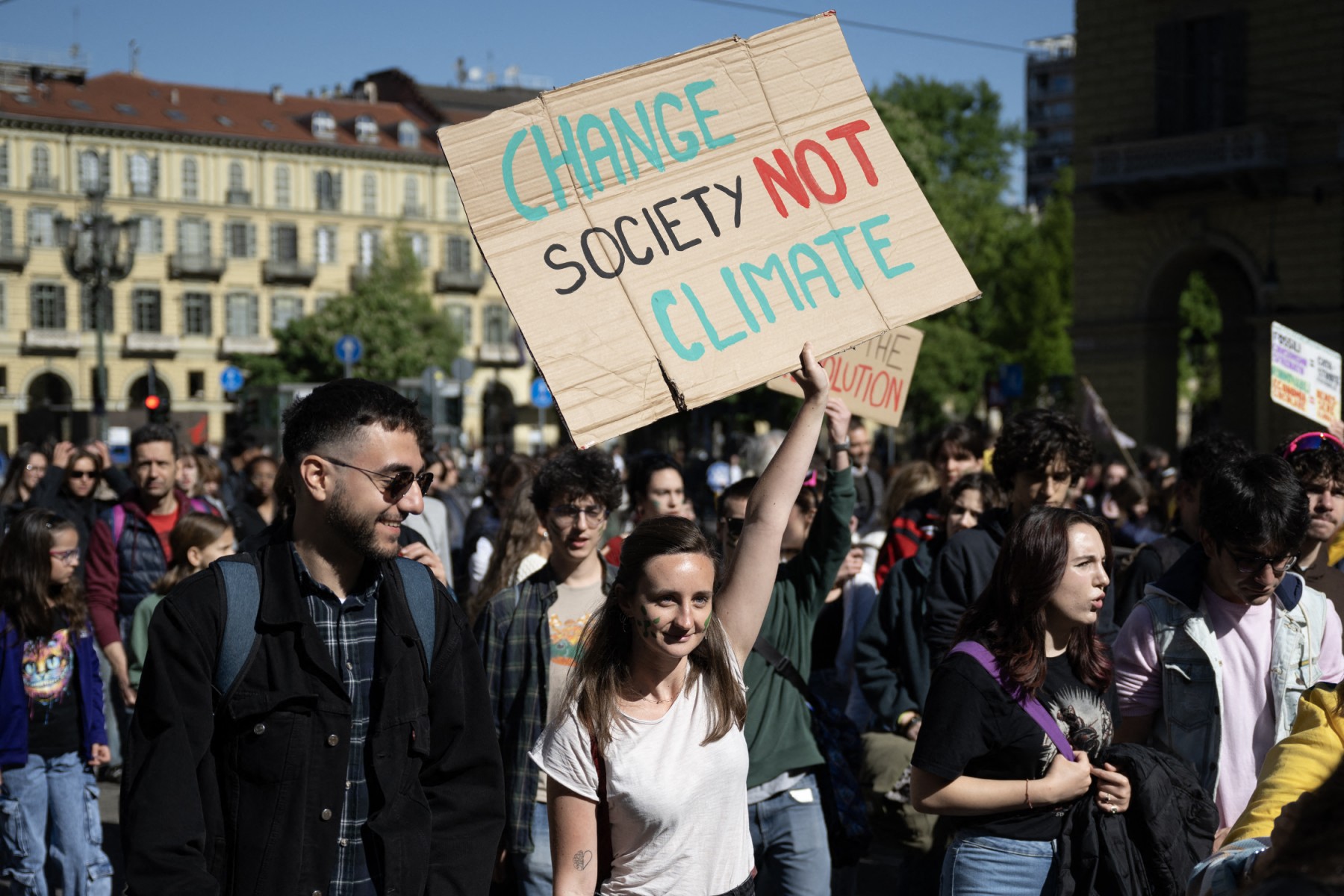
An appeals court in Rome is scheduled to issue a ruling later this month in Italy's first climate lawsuit against the state, following an appeal by environmental campaigners seeking legally binding cuts to national greenhouse gas emissions.
The case, named "Giudizio Universale" or Last Judgment, was brought in June 2021 by the environmental organisation A Sud alongside more than 200 other associations and citizens. The plaintiffs argue that Italian authorities have breached fundamental human rights by failing to implement sufficient measures to meet the commitments established under the 2015 Paris climate agreement.
In their initial action, the claimants asked the court to declare the state responsible for contributing to the crisis and compel Rome to reduce emissions by 92 percent from 1990 levels by 2030. However, a lower civil court in Rome dismissed the lawsuit in 2024, accepting the government's position that civil tribunals lack jurisdiction to evaluate official climate policy.
Luca Saltalamacchia, an attorney representing A Sud, challenged that earlier dismissal, noting that European courts typically assess cases on their merits. "Never before in a European country has a judge simply said, ‘No, I cannot rule’," he said.
The plaintiffs appealed by submitting updated scientific data concerning desertification, flooding, and heat-related excess fatalities across Italy. They also cited legal precedents, including a 2024 European Court of Human Rights judgment involving Switzerland that linked climate protection to human rights, as well as a 2022 amendment to the Italian constitution requiring the state to safeguard the environment and ecosystems for future generations.
"I joined the trial because I have a mission to inform society about the risks we face due to climate change," said climatologist Luca Mercalli, one of the claimants in the suit. He noted that a victory would compel authorities to address the crisis much faster and more concretely.
Around 160 similar cases challenging governmental climate commitments have been initiated worldwide, according to Jameela Joy Reyes, a climate law specialist at the London School of Economics' Grantham Research Institute. Reyes noted that while tribunals were initially cautious, recent years have witnessed "more active decision-making from courts," with more than half of the 200 cases reaching supreme courts since 2015 producing outcomes that supported climate action.