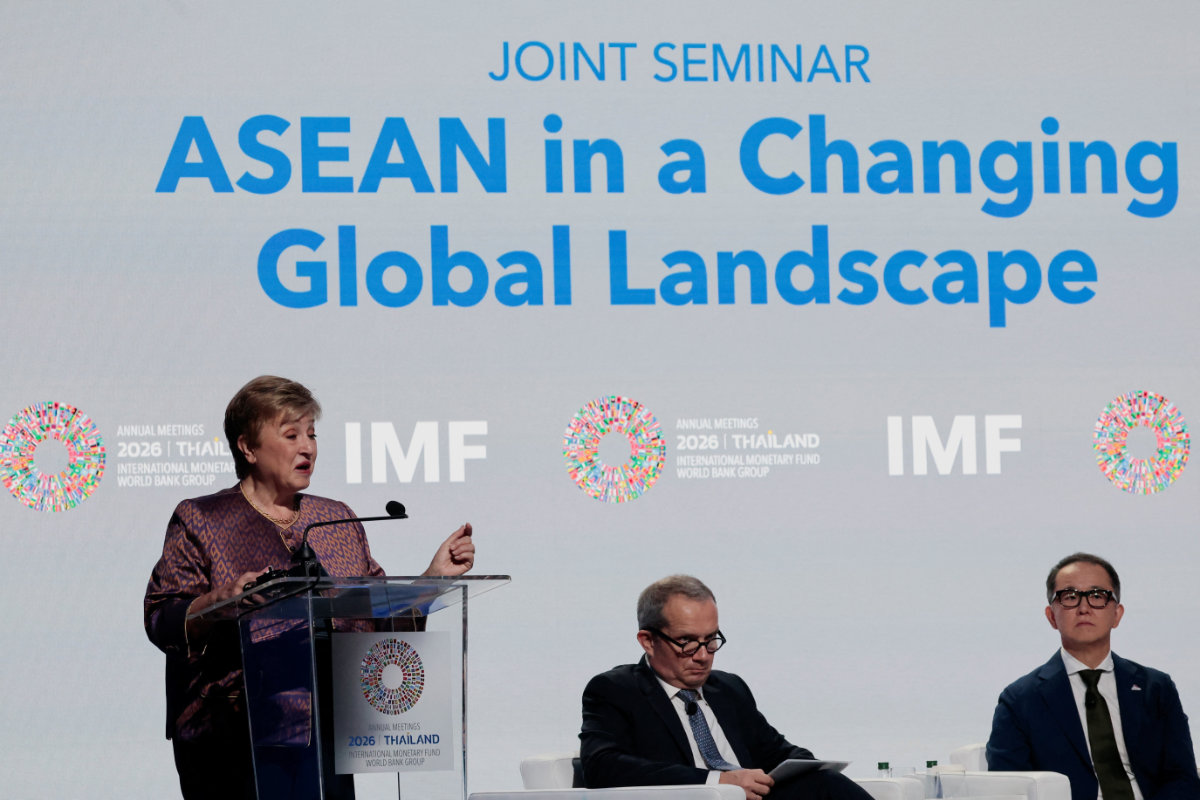
Economic growth across Asia is set to decelerate over the coming years as higher energy costs, rising bond yields and potential reversals in the artificial intelligence sector weigh on activity, the International Monetary Fund said on Thursday.
Releasing its regional outlook during annual meetings in Bangkok, the fund projected Asia’s economy would expand by 4.8 percent in 2026 and 4.4 percent in 2027. While both figures mark upward revisions compared to forecasts issued in April, they represent a slowdown from the 5.0 percent pace recorded in 2025.
Emerging Asian economies, which serve as the primary engine of regional expansion, are forecast to see growth drop to 5.1 percent in 2026 from 5.6 percent last year because of elevated energy costs. Conversely, advanced economies in the region are projected to accelerate to 3.2 percent in 2026 from 2.5 percent, lifted by the global boom in artificial intelligence.
However, the IMF warned that risks remain tilted to the downside. A prolonged conflict in the Middle East could keep commodity prices elevated and exhaust oil reserves, while a correction in artificial intelligence demand would hit Asia particularly hard because of its deep integration in the sector's production chain.
The global lender also flagged turbulence in capital markets, noting that expected monetary tightening in the United States and fiscal strains across major advanced economies could spill over to Asian sovereign debt. “The US monetary stance is expected to continue to tighten later this year. The combination of monetary policy tightening and fiscal pressures in most major advanced economies is likely to keep upward pressures on yields across Asia and the Pacific.”
The fund noted that currency depreciation pressures have emerged since this year's energy shock, alongside portfolio outflows from assets including South Korean technology equities. “With public debt and borrowing needs remaining high across much of the region, an abrupt tightening of financial conditions could further strain public finances by raising debt-servicing costs,” the IMF said.
In response to these vulnerabilities, the institution urged regional central banks to stay focused on price stability and act promptly if inflation persists. It also advised governments to implement targeted and temporary fiscal measures rather than broad price controls or blanket fuel subsidies.