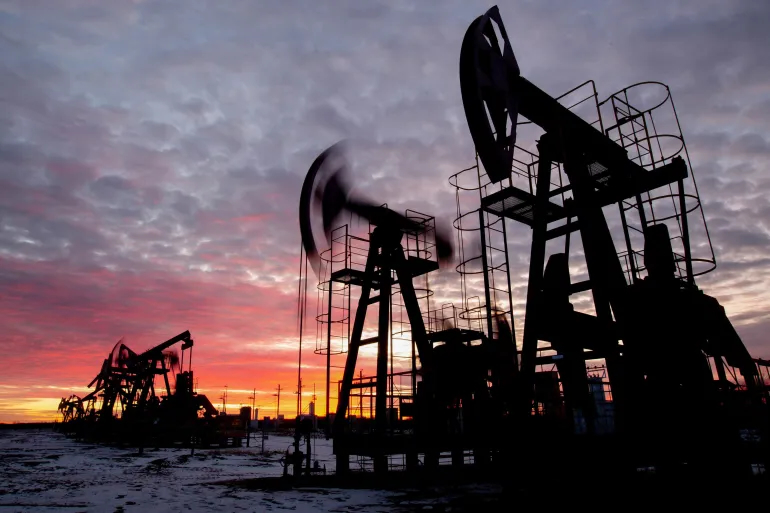
Oil prices gained more than $1 a barrel on Thursday, lifted by fatal Houthi strikes on Saudi Arabian targets that renewed fears of wider conflict and regional supply disruptions.
Brent crude futures advanced $1.93, or 1.77 percent, to reach $110.75 a barrel, while US West Texas Intermediate crude increased by $1.43, or 1.47 percent, to trade at $98.58. A day earlier, Brent had closed virtually unchanged and WTI had dropped 67 cents.
ING analysts noted on Thursday that “Oil prices remain well bid, with ICE Brent back above $110 per barrel this morning following additional deadly attacks on Saudi Arabia.”
The market reaction followed Wednesday's assaults by Yemen’s Iran-aligned Houthis. A strike at a civilian airport in Dammam left one person dead and eight others injured, while a separate drone attack killed two people at a Saudi oil field. In response to the regional volatility, US officials said the State Department intends to evacuate family members from several diplomatic missions in the region.
Maritime tensions also flared in adjacent waters. Iran’s Islamic Revolutionary Guard Corps Navy announced on Thursday that its forces had tracked and simultaneously struck four vessels involved in illegal oil transfers in the northern Persian Gulf, causing them to catch fire. The IRGC added that another three ships struck mines west of the Strait of Hormuz, warning the US military of potential retaliatory actions against its regional bases.
Energy markets were additionally swayed by shrinking domestic inventories in the United States. Data from the US Energy Information Administration showed crude stockpiles dropped by 3.06 million barrels to 412.5 million barrels last week, far exceeding forecasted draws of 820,000 barrels. Distillate supplies rose by 1.68 million barrels to 104.3 million barrels, defying expectations of a 1.16 million-barrel decline.
To curb price surges sparked by diesel shortages tied to conflicts in Ukraine and Iran, the US Department of Energy said the Trump administration will offer loans of up to nearly one-third of the country's 1-million-barrel emergency heating oil reserve.