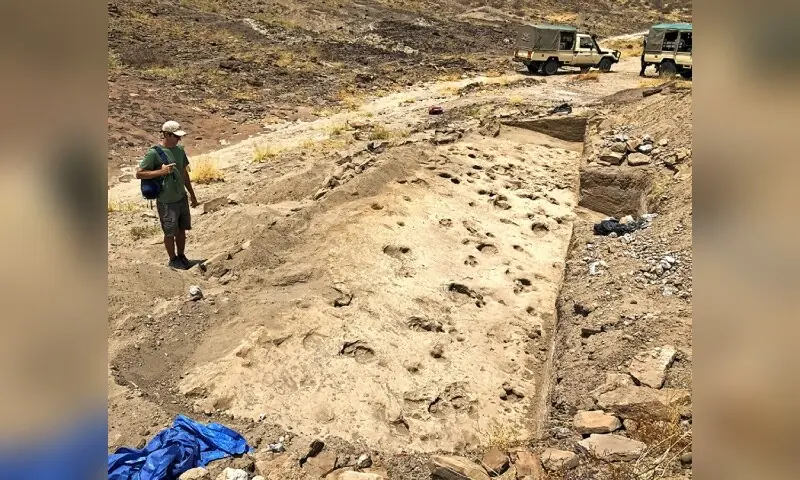
Footprints left on a muddy lakeshore in northern Kenya around 1.43 million years ago are providing new insight into the size and behaviour of a species in the human evolutionary lineage that was the last of its kind, known for extensive anatomical adaptations for eating tough vegetation. The species, Paranthropus boisei, is known mostly from skull and tooth fossils. Now, researchers working along the eastern side of Kenya’s Lake Turkana have identified 21 footprints made by eight individuals of this species who appear to have been walking together on a mudflat. They attributed the tracks to this species based on foot shape and gait, and concluded they probably were left by adult males, due…
Kenyan footprints shed light on prehistoric human cousin Paranthropus
Advertisement
Leaderboard ad — 728×90
Advertisement
In-article ad — fluid
This is a curated summary. The full report, with all details and context, is available from the original publisher.
Read the full story at DawnHeadline, summary and image are © Dawn and are shown here under standard aggregation practice with full attribution. News Inspection does not claim ownership of this reporting.